What is CPQ? The meaning of configure, price, quote in a plant
CPQ stands for configure, price, quote. CPQ software takes the options a customer wants, checks that they work together, prices the result and produces the quote. That is the CPQ meaning in sales software. In a plant whose products have options, rules and drawings, the same three letters also cover engineering work. This guide explains the term for that plant’s owner.

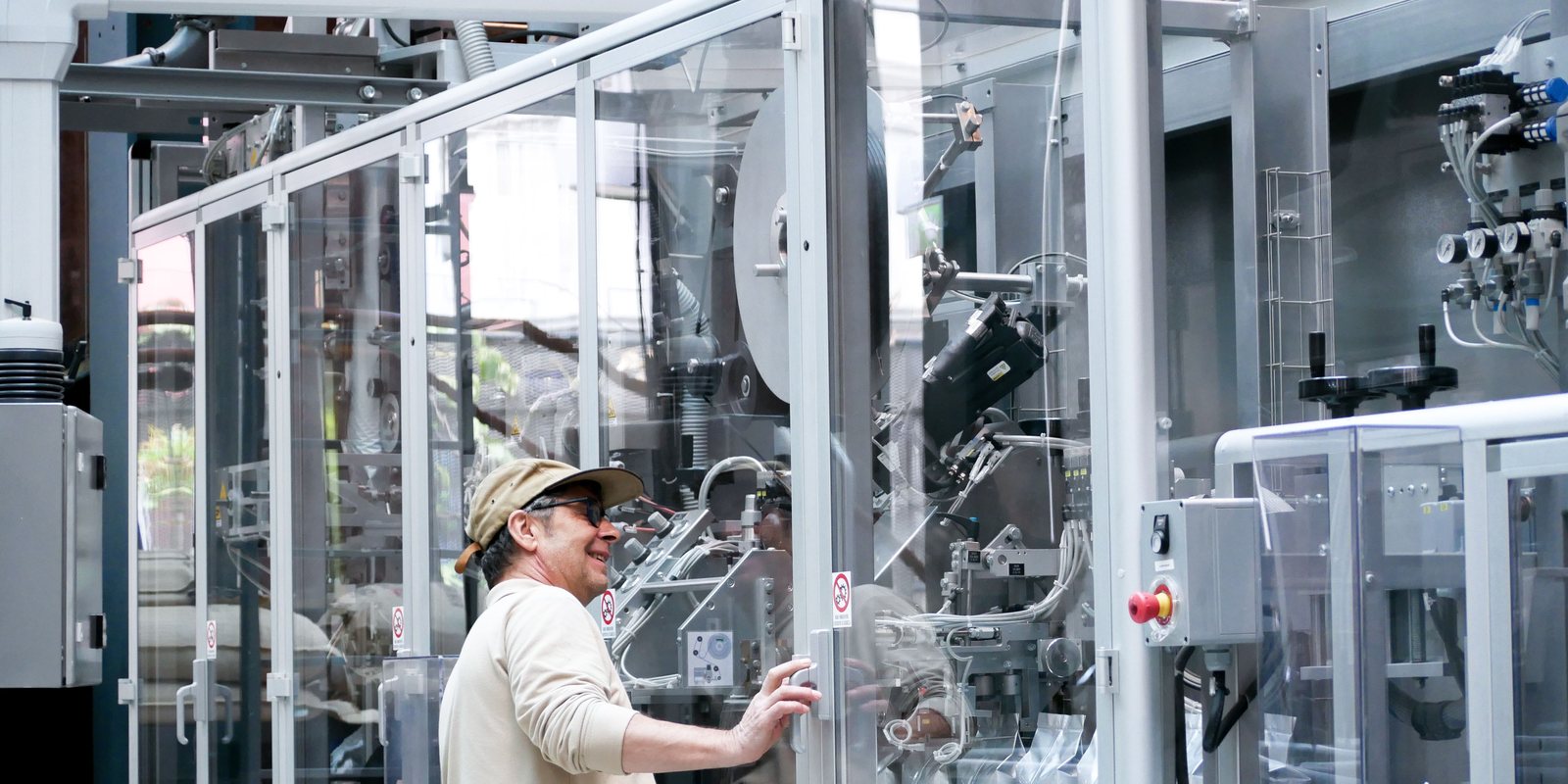
CPQ meaning: configure, price, quote
CPQ is an abbreviation for configure, price, quote. Each word names a step, and CPQ software runs the three steps in order every time a customer asks for a price.
- Configure. Choose a valid combination of options. The software offers only the choices that work together and fills in what follows from them. In a plant, a configuration also fixes sizes and parts.
- Price. Turn the configuration into a price. Sales tools apply list prices, discounts and approval rules. A plant also needs the cost of what was configured.
- Quote. Produce the document the customer receives, with the price, the terms and, for equipment, a drawing.
The term spread through sales software for companies that sell many products or subscription plans. That history explains why most explanations of CPQ talk about bundles, discount approvals and contracts. Salesforce, for example, no longer sells Salesforce CPQ to new customers and points them to Revenue Cloud Advanced instead.
Sales CPQ and manufacturing CPQ
The same three letters describe two different jobs. The difference shows up in where the rules come from and in what the quote has to carry.
| Topic | Sales CPQ | Manufacturing CPQ |
|---|---|---|
| What is sold | Subscriptions, services and catalogue products | Configurable products built to order |
| What configure means | Picking products, plans and add-ons | Choosing sizes and options that engineering rules allow |
| Where the price comes from | Price lists, discounts and approval thresholds | The cost of the configured parts and hours, plus a markup |
| What the quote carries | A price, terms and a contract | A price, terms, a lead time and often a drawing |
| Who maintains the rules | Sales operations | Engineering, with sales asking for changes |
| What it connects to | The CRM and the billing system | The ERP, the CAD system and the CRM |
A manufacturer can run sales CPQ, and some do for spare parts and catalogue items. It strains when each order changes the product. The rules that decide what can be built live in engineering, not in a price list.
Some vendors cover both jobs, usually by pairing sales CPQ with a configuration engine or with CAD automation. CPQ tools sorts the main vendors by which of the two jobs they were built for.
Your Excel builder is already a CPQ
Many plants that build to order run CPQ without using the name. A sales engineer fills in an Excel workbook, often called the builder, for every request. Its option lists, lookup tables and formulas turn the customer’s choices into sizes, parts and a price. A drafter then turns the order into a drawing, and the quote goes out by email.
Seen that way, buying CPQ software is a decision about which steps to move out of the workbook and the drafter’s queue. It is also a decision about how to keep the rules that already work. CPQ for manufacturing walks through each step and what it reads from your records.
A CPQ example from a plant
Here is what the three steps look like for a configured conveyor section. The example is generic, and every plant’s rules differ in the detail.
- Configure. The customer asks for a 6 m section with a 600 mm belt and the drive at the discharge end. The rules set the number of supports, pick the drive from the load and add guarding on both sides.
- Price. Each part in the configuration is costed at the price last paid, and each operation at your hours and rates. Your markup method turns the cost into a price, with each option’s share visible.
- Quote. The quote carries the price, the lead time, the terms and a drawing that shows the overall size and where the section connects to the line.
Change the length to 8 m and every step reruns. The section gets more supports and, if the load demands it, a different drive, then a new price and a new drawing. CPQ software reruns those steps from the rules, while a builder-and-drafter setup reruns them by hand.
Who uses CPQ in a plant
Several people touch a CPQ, and each needs something different from it.
- The sales engineer enters the configuration and answers the customer’s questions with the price and the drawing in hand.
- Engineering owns the rules and decides what the configurator may offer, and what goes to an engineer instead.
- The estimator or controller owns the costs and the markup method that turn a configuration into a price.
- The owner sees which quotes went out, at what margin, and who approved each one.
A CPQ that serves only the sales team tends to drift from engineering. The rules then live in two places again, the CPQ and the builder, and nobody trusts either one completely.
Where the 3D model and the quote drawing fit
Sales CPQ ends with a document. Manufacturing CPQ often has to produce a drawing as well, because a customer buying equipment checks that it fits before ordering. That drawing is usually a general arrangement drawing, showing the overall size, the interfaces and the connection points.
The drawing can come from the same configuration as the price. A parametric 3D model of the product family takes the configured dimensions, and a drawing template linked to the model updates with it. Design automation tools such as DriveWorks already generate models, drawings and bills of materials from rules this way.
The model also serves the shop. Once the order is won, the same model produces the bill of materials and the production drawings. Nobody has to redraw the quote after the sale.
When a plant needs CPQ software
A plant needs more than its builder when the builder becomes the bottleneck. These are the usual signs:
- Quotes wait for the one or two people who understand the workbook.
- The same product family is quoted many times a month in different sizes.
- Prices in the workbook lag behind what material and labour cost today.
- The drafter redraws a quote drawing for every request, and quotes wait for drawings.
- Nobody can say which version of the rules produced a given quote.
Quote speed matters to buyers. A 2025 survey fielded by TrendCandy for Aleran polled 200 decision-makers at US manufacturers, wholesalers and distributors. Of them, 71 percent said a quote takes at least a day. The survey measured how long quotes take, not the effect of any tool.
If none of those signs apply, a well-kept builder may be enough for now. If several do, start with one product family rather than the whole catalogue. Keep the builder running beside the new tool until the two agree on past orders.
What CPQ is not
CPQ is often confused with the systems around it. These are the lines between them:
- It is not a CRM. A CRM tracks customers, contacts and opportunities. CPQ produces the configuration and the price for one of those opportunities.
- It is not an ERP. The ERP runs orders, inventory, production and accounting once an order exists. CPQ works before the order and hands it to the ERP.
- It is not CAD. CAD holds the geometry. Manufacturing CPQ drives the CAD system from rules, but the model still lives in CAD.
- It is not price optimization. Price optimization sets price levels from cost, demand and win-loss history. CPQ applies prices to one specific configuration.
How to choose CPQ software
Start from what you need back, not from a vendor list. A plant that sells configured equipment needs a price from its own costs, a bill of materials and a drawing. A plant that sells catalogue parts may only need a price and a quote document.
CPQ tools groups the main vendors by what they do, with the questions to ask each one. Product configurator software covers the configure step on its own. ThriveAI builds CPQ as a module on a workspace that holds your data, starting from your builder, as the AI CPQ offer describes.
Whichever route you take, test it on your own past orders before you sign. Take twenty quotes from one product family, with the prices and drawings that went out, and ask the vendor to reproduce them. The differences show how much of your rules the tool really holds, and how much would still sit in someone’s head.