Offer 03Quoting

AI quoting software for manufacturers

Each request for quote is read, priced from your own costs and drafted for an estimator to approve.
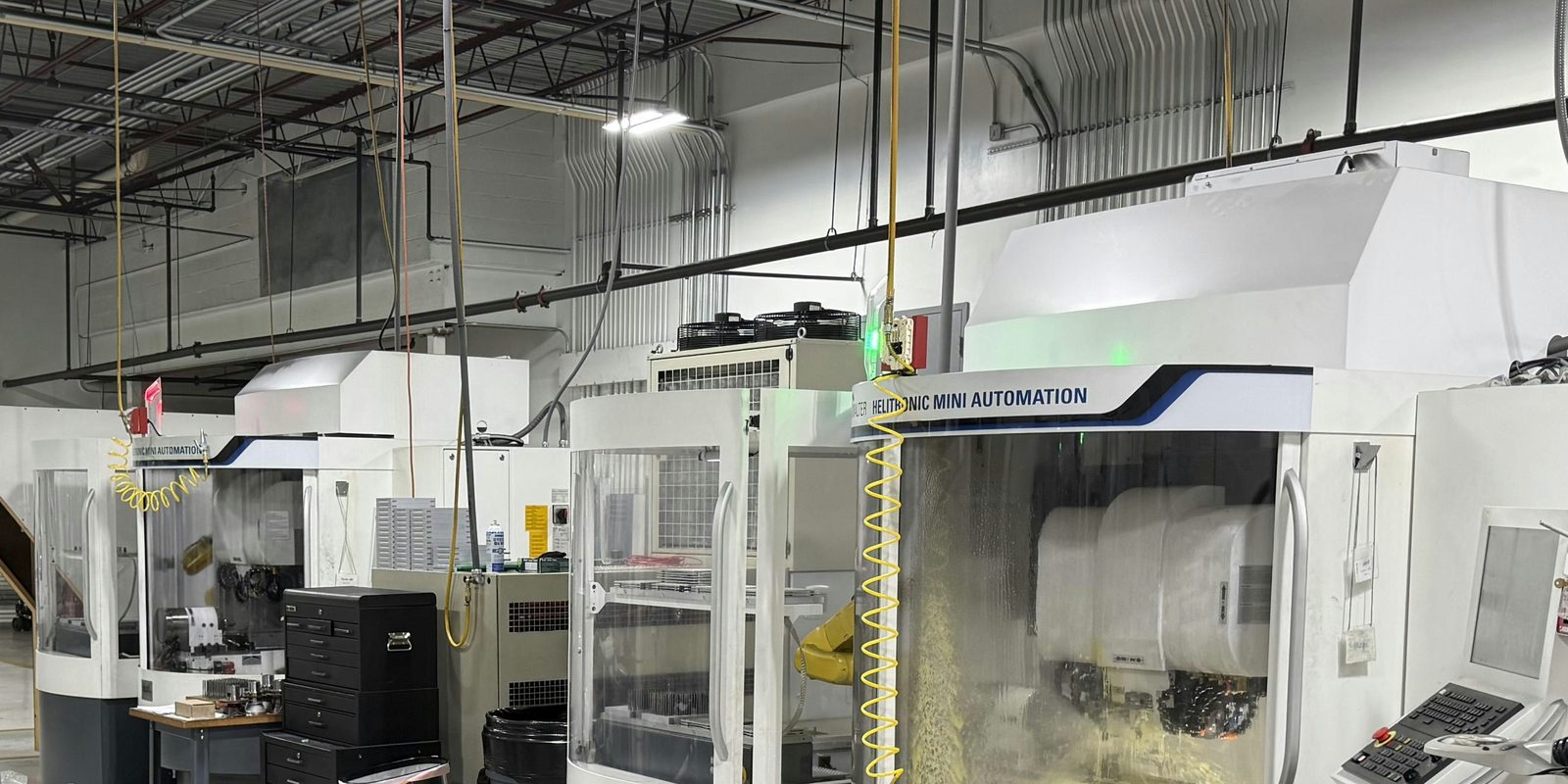
A row of white CNC tool grinding machines with glass doors and control panels in a bright machine shop

Who it’s for

This offer is for the owner of a $5M to $50M custom or made-to-order manufacturer in Ontario or Quebec. That includes machine shops, fabricators and equipment makers. It is also for the estimator.

Requests for quote arrive by email with drawings attached. The owner or one estimator prices each one from experience. Quotes take days, and every other request waits behind the one person who knows the prices. In Modern Machine Shop’s Top Shops 2025 benchmarking survey, the top 20 percent of responding shops reported a one-day quote time.

The offer fits when:

  • One person prices most quotes, and requests wait when that person is busy or away.
  • Drawings and past quotes sit in email, so finding a comparable part means searching the inbox.
  • Quotes use material prices from memory instead of what you paid on recent invoices.

What you get

01One inbox for requestsA mailbox or folder that collects requests for quote, with their drawings, specs and models.
02Each request read into fieldsCustomer, part number, revision, material, quantity and due date, and any note that changes the price.
03Comparable past partsThe closest parts you made or quoted before, with what you charged for each.
04Dimensions from the drawingRead off each drawing’s title block and shown beside the drawing. CAD models open in the browser, so nobody has to launch CAD to look at a part.
05Material at the price you paidMaterial cost taken from your recent supplier invoices.
06A suggested price, line by lineMaterial, machine time, labour and markup, built from your own costs and your markup method, with the comparable parts beside it.
07A draft quote in your layoutSaved as a draft in your accounting system or quoting tool where it accepts drafts, with a draft reply in the estimator’s mailbox. Nothing goes to a customer until a person approves it.
08A logEvery request, draft, change and approval, with the person who approved each quote.

How it runs

Four weeks from the first call to daily use.

Week 1A test set of past requests with the prices you quotedWe collect recent requests for quote and the quotes they became, plus your material prices, machine rates, labour rates and quote template. With you, we agree a test set of past requests with known prices.
Week 2Suggested prices checked against quotes you already sentWe build the costing method from your records: material, machine time, labour and markup. We price the test set and compare each suggested price with what you quoted.
Week 3A record of how the drafts compare on live requestsYour estimators get a draft for each new request, beside their usual process. We compare each draft with the quote they send and fix what differs.
Week 4Drafted quotes in daily use, with a person approving each oneYour estimators work from the drafts, and a person approves every quote before it goes out. We hand over and decide with you what comes next.

The first stage takes four weeks, at a fixed price agreed before work starts. It runs on your own workspace, and if you stop there, everything built in it is yours to keep.

What we need from you

AccessA mailbox or forwarding address for requests for quote, and access to the accounting system or quoting tool your quotes go into.
DataRecent requests for quote with the quotes they became, recent supplier invoices for material, and your machine and labour rates.
Your quote template and markupThe layout your quotes go out in, and how you set markup today, even if it lives in one person’s head.
TimeYour lead estimator or the owner, about two hours in week one, then about an hour a week to review drafts.

What changes

Your estimators start each quote from a draft instead of a blank page. Each suggested price shows the comparable parts, material cost and hours behind it, so a person can check it before it goes out.

The pricing that lived in one person’s head becomes a costing method your team can read and correct. A request waiting in the inbox is visible, so a busy week or a vacation does not stop the quoting.

ThriveAI built this for a precision manufacturer whose owner priced every quote himself (work sample 05). He now gets a suggested price on each request, anchored on what he charged for comparable parts. It runs on real data, writes drafts into his accounting system and mailbox, and stops there, because nothing should go out without him.

After week 4

Quoting keeps running on your workspace after week 4, and its costs feed the next module.

Your workspace
One database with your data and your definitionsDesigned to run on its own server in Canada. A chat answers from it and shows the query.
Your systems
ERPAccountingEmailSpreadsheetsFiles and drawings

Each offer adds one module. The modules share one database and one set of definitions, so each new one starts from data that is already clean. If you stop, what was built is yours.

What can come next

Your requests, quotes and costs now sit in your workspace. Margin and pricing can check every price against current cost, and reporting can answer which quotes became orders.

Questions people ask

What does it cost?
The first stage is a fixed price agreed before work starts, based on the job. ThriveAI does not publish rates.
Does a quote go to a customer without a person approving it?
No. Every draft waits for a person to approve, change or reject it, and nothing is sent to the customer on its own. The log records who approved each quote. Human in the loop explains how that approval step works.
Where does the suggested price come from?
From your own records: comparable parts you made or quoted, material at the price on recent invoices, and your machine rates, labour and markup. A request with no comparable part or a missing cost goes to a person instead of being guessed.
Can it read our drawings?
It reads the dimensions off each drawing’s title block and shows them beside the drawing. CAD models open in the browser, so the estimator can rotate a part without launching CAD.
Do we need to replace our quoting tool or accounting system?
No. Drafts go into the accounting system or quoting tool you use today.
Where does our data go?
The platform is designed to keep each client’s data on its own server in Canada. You choose a model on that server or a hosted model under a written zero data retention agreement. A hosted model may process requests outside Canada. For the options, see private AI for business.

Contact

Price your quotes from your own costs

Tell Derik what you make, how requests for quote reach you and who prices them today. He will tell you what a four-week quoting build would cover.

Prefer to talk? Book a meeting.

Your message goes to Derik Lawlis, the founder.