AI for manufacturing: 6 jobs, and which one to start with
AI for manufacturing drafts the work at six desks inside a small plant, and a person approves every output.

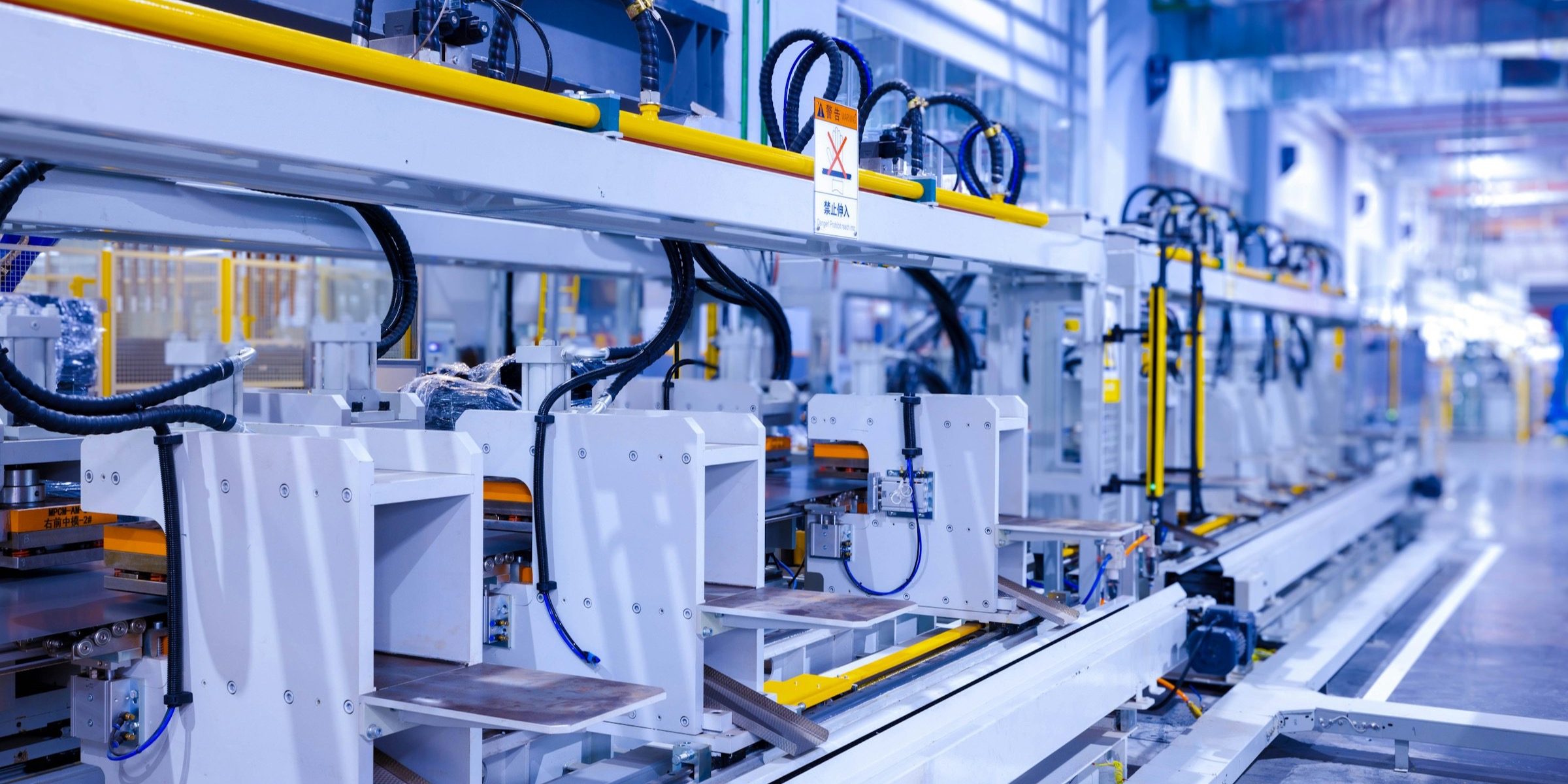
What AI does at each desk
AI for manufacturing at a 20 to 200 person shop is software that reads the plant’s own records and drafts the work at six desks. Those desks are quoting, costing, scheduling, purchasing, order entry, and forecasting, and a person approves every output. When no packaged product fits a desk, the module is custom manufacturing software built beside the ERP (enterprise resource planning) system.
Most other pages about AI for manufacturing cover the plant floor: digital twins, predictive maintenance, machine vision, collaborative robots, and generative design. A digital twin is a software model of a running machine or line, and generative design software proposes part shapes. Those are real projects, and a manufacturer ten times this size buys them. A shop this size rarely has the staff to run those projects, and none of them touches the desks where margin is decided. For what a robot or a machine that sees can do in a plant, see physical AI. In a custom shop, the margin depends on the work between the request arriving and the invoice going out.
| Desk | What arrives today | What AI drafts | What the person decides |
|---|---|---|---|
| Quoting | An email with a drawing attached | A price anchored on comparable parts that the shop has built | The number that goes out |
| Costing | A standard that somebody set years ago | Cost per part as a recipe, line by line | Which line to trust when two disagree |
| Scheduling | A date made from optimism | The measured span for work of that shape | The date that the shop commits to |
| Purchasing | Supplier quotes as PDFs | Each line matched to the price last paid | Whether the order goes |
| Order entry | A customer purchase order as an attachment | A draft ERP order with the mismatches called out | Accept the draft or correct the draft |
| Forecasting | One person’s read on what is coming | What the sales history supports, and where the AI declines to forecast | What to buy against the forecast |
Quoting
The request arrives as an email with a drawing attached. Somebody opens the email, recognizes the shape, and prices the part from memory of the last similar part. That somebody is usually the owner or the one estimator, and every other request queues behind that person. A plant that sells configured products quotes through CPQ (configure, price, quote) software instead, as what is CPQ explains.
Modern Machine Shop’s Top Shops 2025 report covers the top fifth of North American machining operations in the industry’s annual benchmarking survey. Those shops turn a quote around inside a day and book 19 percent more of what they quote. Most shops do not get near that. Across manufacturers and distributors more broadly, 71 percent say that a quote takes at least a day to produce. That figure comes from the 2025 Built to Sell Report: 200 respondents at firms of 100 or more staff, fielded in July 2025. The number is a floor, not an average.
AI reads the drawing and the request. The software then pulls the parts that this shop has already quoted and built that match on material, size, process, and tolerance. A suggested price goes in front of the estimator, with those comparable parts beside the price. The estimator changes the number or sends the quote. The rule that sets the number reads the shop’s own won and lost quotes, not a market rate. ThriveAI’s AI quoting software drafts each quote this way, priced from your real costs for an estimator to approve.
A machine shop priced every quote from experience, with the drawings buried in an email thread. The suggested price arrives anchored on what the shop charged for comparable parts. The dimensions come off the title block, and the metal cost comes from recent invoices. The system writes a draft estimate and a draft reply, and stops for a person.
A plant that sells configured products quotes from rules instead, usually kept in an Excel workbook, and the quote often needs a drawing. CPQ for manufacturing covers that case. Engineer to order covers the orders that the rules do not reach, and AI CAD covers what AI drawing tools produce. A plant that shops for software can compare the CPQ tools by what each one does. If the rules live in an Excel workbook, the free Excel builder map lists the workbook’s dropdowns, lookup tables, and formula chains.
Costing
The quoted price and the actual cost of the job rarely meet in the same place. The quote lives in a spreadsheet or in the estimator’s head. The cost lives in the ERP as a standard that somebody set years ago, and in time records that nobody reads back.
AI assembles the cost per part as a recipe that the shop can read. Material enters at the price actually paid on recent invoices for that grade and size. Time comes from the shop’s own job records for work of that shape. The ERP’s standard cost sits beside the recipe, so the gap between the system’s number and the floor’s number is visible.
A recipe is more useful than a single number, because any line opens to show the source. When a line has no basis, the recipe says so instead of filling the gap with a zero.
Scheduling
Promise dates come from optimism and from whoever is standing in the room. The date goes on the order acknowledgement, and the floor finds out afterwards.
Metal fabricators deliver about 84 percent of orders on time industry wide, against better than 90 percent in the top quartile. The figures come from the Fabricators and Manufacturers Association benchmarking survey, as cited by Infor in August 2026. Roughly one order in six lands after the promised date.
AI reads the span that this shop measured between release and shipment for work of that shape. The desk gets a lead time that the record supports. The software checks the customer’s contract terms against the suggestion, and shows any conflict without resolving the conflict. Nothing fills in automatically. The desk types the date that the shop commits to.
Purchasing
AI does not decide which purchase goes ahead. AI matches each supplier quote line to the price last paid, flags the lines that moved, and leaves the decision to the buyer.
Supplier quotes arrive as PDFs, and somebody retypes each quote into a purchase order. The price last paid for the same part sits in the ERP, and checking that price takes longer than trusting the quote.
AI reads each supplier PDF, matches every line to the right part, and sets the quoted price against the price last paid. Each line that moved gets a flag with the size of the move and the date of the last purchase. The software lists every line that has no match, instead of dropping the line.
The buyer approves the order. Nothing reaches a supplier until a person puts a name on the order.
Order entry
A customer purchase order arrives as an email attachment, in whatever layout that customer uses. Somebody types the order into the ERP line by line, and a mistyped digit leads to a wrong shipment.
AI reads the attachment, matches every line against the price file and the catalogue, and drafts the order for the desk. The draft marks each mismatch on the affected line. Examples are a price that disagrees with the contract, or a part number that matches two items. The desk accepts or corrects the draft. ThriveAI’s order desk automation drafts each emailed purchase order as an ERP order for a person to approve.
Forecasting
What the plant will need, and when, is held in one person’s head. The sales history that would answer the question sits in the ERP, split across codes that nobody has reconciled.
AI reads the sales history and the open orders and says what the record supports. Where the history is thin, the software declines to forecast and names what is missing, instead of extrapolating from a handful of orders. Stock levels are the same question asked earlier, and the answer is only as good as the sales history underneath. Forecasting is the least proven of the six desks, and ThriveAI would build forecasting last.
Which desk queues behind one person
Tell Derik the desk and the systems that the plant runs. He sends back what reading that desk’s records would take.
Start a conversationThe record underneath all six
None of the six desks runs on a chat window pointed at the ERP. Each desk needs one record of what the plant quoted, built, paid, and shipped, assembled from the systems that the plant already owns.
Five sources hold that record: the ERP, the mailbox, the drawing vault, the shared drive, and the spreadsheets. The spreadsheets exist because the ERP never had a field for what the spreadsheets hold. All five sources get copied into one data warehouse, a database built for analysis. Nothing is replaced, and nothing is migrated.
Then the same part number has to mean the same thing in all five sources. A code in the ERP, a code on the drawing, and a code in the price spreadsheet often differ. The difference is a suffix, a space, or a revision letter. Until someone reconciles those codes, a number assembled across two systems is a guess.
Every value keeps a link back to the source record. A disputed price opens to the invoice behind the price, so the argument ends at a document. When the record cannot answer, the system says so and names what is missing. A silent zero is the costly failure, because a zero gets quoted.
A named person approves every quote, every message, and every change written back to the ERP. Nothing goes out automatically.
At a Quebec manufacturer, the costing engine reconciles 1,603 figures exactly against the client’s own cached numbers. The engine reads 5,261 of the 5,262 distinct sold codes in that sales history and names the one code that the engine cannot read. Those are counts of work done, not a claim about what the shop earned.
Once the record exists, one question can span the ERP, the mailbox, and the drawing. The answer names the source beside each fact.
Derik at Thrive was instrumental in taking incredibly messy data we inherited in a business we acquired and, through using AI, organized it in record time in a way that made it reviewable by our team for final review and approval. He proposed solutions that were effective to implement and everyone on our team was impressed and happy to work with him.
Rios-Karim Mercier, Belmont Capital.
Where the data sits, and where the model runs
Your stored data stays on your own server in Canada or the United States, one dedicated machine per client. Inference, the step where the model reads a request and writes an answer, runs one of two ways, and you choose. The first way runs an open-weight model on that same server, so nothing leaves the machine. An open-weight model is one whose weights are published for anyone to run. The second way uses a frontier model, one of the largest hosted models, under a written zero data retention control. The contract names the model tier, and zero retention is not available for every tier.
This description is not an audited certification or a legal conclusion. The setup has no SOC 2 report (an independent audit of security controls) and no compliance opinion. The control is described so that your counsel can decide. For the same choice, and for who signs the output that comes back, see industrial AI in a plant of 20 to 200 people.
The same pattern at a distributor
A distributor has the same problem with a shorter list of desks: order entry, purchasing, and supplier documents. Orders arrive as email and PDF, and one person carries the retyping. That person’s vacation is an operational risk.
Underneath sits the same record problem in a different shape. The same product carries different specifications in the supplier’s sheet, the ERP, and the spreadsheet that sales works from. Nobody owns the question of which file is right, so quotes go out from whichever file was open.
A distributor held 39 GB across more than 14,000 files that disagreed with each other. One catalogue feeds four systems, and most values carry a recorded origin. A verification queue lets the client team check, one by one, the values that need a human decision.
Order entry is the desk that can go early, because the work is easy to read and arrives daily. The same holds at a distributor, where buying and order entry usually sit with the same two people. For that shape, see AI for supply chain when the function is two people and a spreadsheet.
What has to be true before any module works
Four conditions decide whether a plant is ready, and all four are cheap to check.
- The ERP can export. If no data leaves the ERP, no software can read the data, and no model quality fixes that.
- Time is recorded against the job, not against the day. A day total is a payroll number. Cost per part needs the hours booked against the job.
- Somebody owns the answer when two systems disagree. Reconciliation is a decision, and a decision needs a name attached.
- The data is allowed to leave the building, or the deployment is designed so that the data stays inside. Both options work, and the second takes longer to set up.
Check those four conditions before anyone writes code.
Which module to build first
Build first the desk where one person is the bottleneck and where the record already exists. Plants usually fail on the second condition.
Quoting looks like the obvious first build, because the estimator is visibly the queue. Pricing from history needs costs that the shop can defend, and those costs live in job records that nobody has reconciled. Costing therefore has to come first when the cost side is not built.
Costing is the less visible module, and costing makes the quoting suggestion worth an estimator’s attention. Once the cost per part has a basis, the quote has an anchor.
Order entry is the exception. Order entry needs the price file, the catalogue, and little else, so this desk can go early while the cost side is still being assembled.
A forward deployed engineer works on site, inside the plant, and builds each module against the real data, not a sample. Questions get answered in the room where the work happens, by the person who writes the code.